The Front & Back Yard Timeline
This is the same yard in Broomfield, Colorado that later earned formal approval from the Anthem Ranch Design Review Committee. It was seeded in a single season and watered on a strict twice-a-week schedule the entire way through — no daily babying required once it got going.
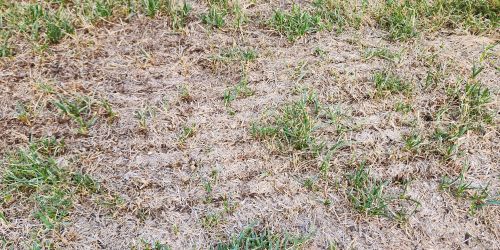
Soil Prep & Seeding
Dethatched and scarified the old turf down to bare soil, then broadcast the MicroLawn blend. At this stage the yard looks worse before it looks better — that's normal.
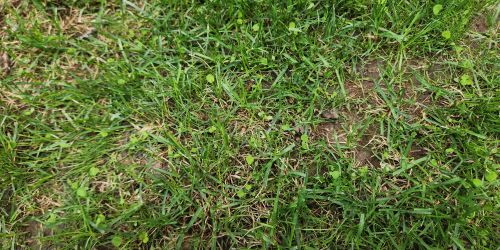
Germination — "The Sewing Needles"
Fine new blades poke through looking thin and sparse for two to four weeks. The ryegrass and microclover establish first; the tall fescue anchors in more slowly. Don't panic if this stage lasts a little longer than you'd like.
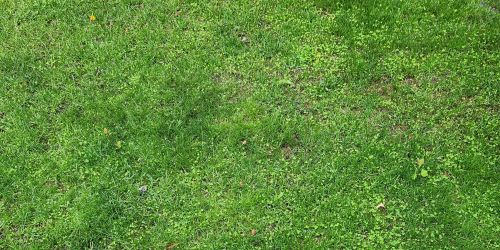
Full Canopy Establishment
A dense, uniform green canopy holding strong in the middle of peak Colorado heat — on just two waterings a week. This is the photo used as supporting evidence for the DRC update.
Case Study: The Parkway Strips
Parkways — the strip of grass between the sidewalk and the street — are a much harsher microclimate than the rest of the yard. Trapped between hot asphalt and concrete, they dry out roughly twice as fast as the main lawn.
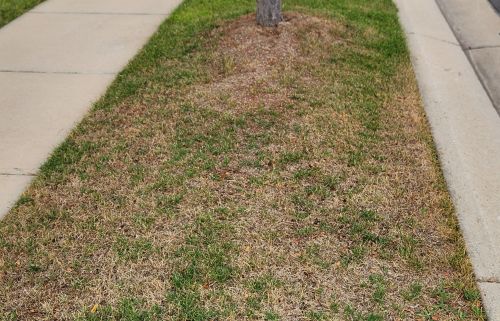
Parkway Strip before Treatment
Compacted soil and a thick layer of dead thatch acting like an umbrella, keeping seed from ever reaching the dirt.
Photo coming soon: Parkway Strip after Treatment
Scarified to break up compaction, seeded heavier than the main lawn, topdressed with a thin layer of compost to shield seed from radiant heat, and given a bit of extra afternoon misting during establishment. Seed and mulch were kept 3 to 4 inches clear of nearby tree trunks to maintain HOA-compliant air circulation around the root flare.
Start Your Own Story
Ready to document your own before-and-after transformation? Head back to the homepage and add your yard to the movement.
Pledge Your Yard